
Costa Rica Night Tour Guide for Private Wildlife

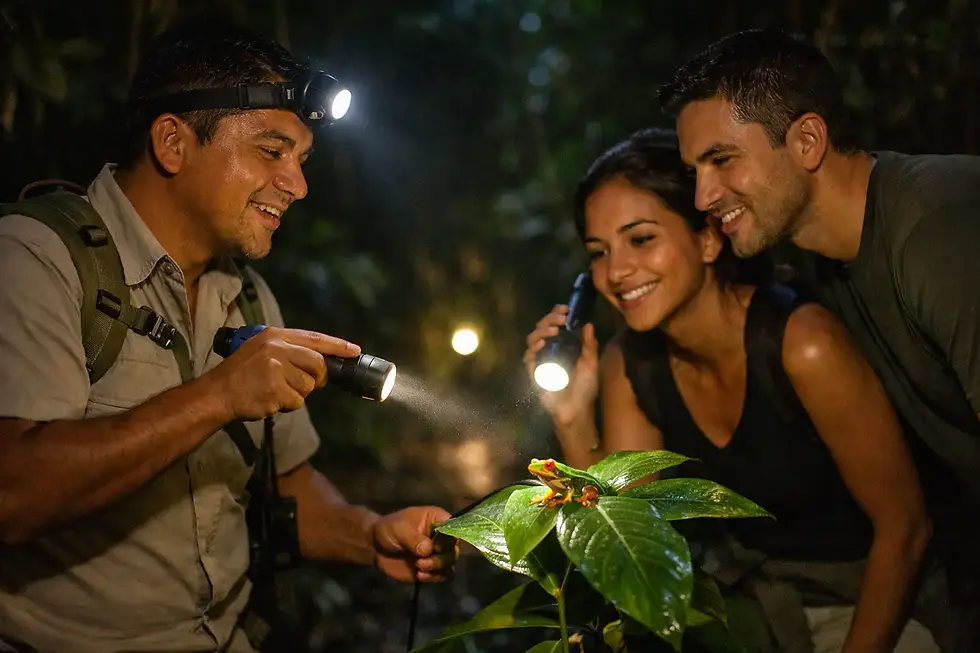
The rainforest changes the moment daylight lets go. A leaf that seemed ordinary at lunch may hold a sleeping frog by evening. A sound in the canopy becomes a pair of eyes, then a kinkajou moving quietly through the branches. The right Costa Rica night tour guide does more than point a flashlight into the dark. They help you slow down enough to notice what the forest is willing to reveal.
For many travelers, a night walk becomes the moment they talk about long after returning home. Not because it was loud or rushed, but because it felt personal: your family standing together beneath the trees, your guide pausing for a tiny glass frog, your children realizing that the jungle never truly goes to sleep. In Guanacaste, those moments are shaped by weather, habitat, timing, and the patience to let nature lead.
What Makes a Costa Rica Night Tour Worth Your Evening
A good night tour is not a checklist of creatures promised in advance. Wildlife does not work that way, and the most meaningful experiences leave room for surprise. One evening may bring red-eyed tree frogs, sleeping toucans, whip scorpions, moths, and a snake resting in the warm understory. Another may be quieter, with the sound of rain on broad leaves and a trail of leafcutter ants doing work that seems almost impossible in the dark.
That uncertainty is part of the privilege. A thoughtful guide reads the conditions rather than forcing the experience. After a warm rain, amphibians may be active. During a dry stretch, the forest can feel different, with more attention drawn to nocturnal insects, reptiles, and mammals. You are not arriving at a wildlife show. You are being welcomed into a living habitat on its own terms.
Private by design, a night walk also gives you something group tours rarely can: space. There is no need to keep pace with strangers or compete for a view. If your teenager is fascinated by spiders, you can linger. If a grandparent prefers a gentler trail and an earlier return, the evening can be shaped around that. Your pace, your adventure.
Choosing a Costa Rica Night Tour Guide
The guide matters because darkness changes the way you move through the forest. You want someone who knows the terrain, understands animal behavior, and can make the experience feel calm rather than performative. The best guides are observant before they are talkative. They listen for calls, notice movement at the edge of a beam, and know when to wait.
Look for natural encounters, not guaranteed sightings
Be cautious of any experience built around guaranteed wild animals or close-up encounters that seem too convenient. Ethical wildlife viewing means no feeding, baiting, handling, or disturbing animals for a photograph. It also means choosing providers that do not keep wild animals in captivity simply to ensure a sighting.
This approach can feel less predictable, but it is far more rewarding. Seeing a frog where it chose to rest or watching a mammal disappear naturally into the trees creates a different kind of memory. You witnessed something real, without asking the animal to perform for you.
Ask how private the experience really is
“Private” should mean more than a reserved vehicle. It should mean the evening is designed around your group, from the pickup plan to the trail choice and pace. For couples, that may mean a quiet walk with time for photographs and questions. For families, it may mean a trail that keeps younger explorers engaged without pushing them past their energy level.
A private guide can also make room for the details that remove stress from an unfamiliar destination. When you are traveling with several generations, arriving after a long flight, or coordinating a group with different comfort levels, those details are not small. They are what allow the evening to feel easy.
Value interpretation as much as identification
A guide who can name an animal is useful. A guide who can help you understand its place in the forest gives the encounter weight. Why does that frog call after rain? How can a bat find fruit in the dark? What does a sleeping bird look like when it feels safe enough to settle on a branch?
The answers turn a sighting into a story. They also create a deeper connection for children and adults alike, especially for travelers who have visited Costa Rica before and want to go beyond the familiar postcard version of the country.
How to Prepare for the Rainforest After Dark
You do not need to arrive looking like an expedition team. You do need to be comfortable enough to stay present. Closed-toe shoes with grip are the most useful choice, especially after rain. Lightweight long pants and a breathable long-sleeve layer can help with insects and brush, while a light rain jacket is sensible in the green season.
Bring water and keep your hands as free as possible. A small camera or phone can be worthwhile, but do not let it become the whole evening. Night photography is challenging, and flash can disturb wildlife. If your guide permits photos, use the lowest-impact setting available and accept that some of the best moments will remain yours rather than becoming a perfect image.
Flashlights require care, too. Bright white beams can disrupt animals, especially when held directly on them for long periods. Responsible guides use light intentionally and encourage guests to do the same. A brief view is enough. The goal is observation, not pursuit.
If you are traveling with children, set expectations before the walk. The forest may be muddy, the path may be uneven, and the most remarkable animal of the evening may be very small. Children often rise to the occasion when the experience is framed as a quiet search rather than a treasure hunt with a promised prize.
The Best Time for a Night Walk in Guanacaste
Costa Rica’s seasons influence the feeling of a night tour, but there is no single month that is best for everyone. The green season, generally from May through November, often brings wetter conditions and abundant amphibian activity. The dry season can offer easier walking conditions and clearer evenings, though the forest may reveal a different cast of creatures.
Your location matters as much as the calendar. Guanacaste includes dry forest, rainforest-influenced areas, coastal habitats, and higher-elevation landscapes within reach of one another. A local guide can help match the evening to where you are staying and what kind of experience your group hopes to have.
Timing matters as well. An early evening departure can work beautifully for families or guests who prefer to return before late night. Travelers who are comfortable staying out longer may enjoy the deeper quiet that arrives later. Neither is better. The right choice is the one that leaves everyone feeling cared for rather than hurried.
Let the Forest Set the Pace
The most memorable night tours are often made of small pauses. A guide kneels beside a leaf. Everyone gathers close. For a few seconds, the only sound is insects and breathing. Then you see it: a tiny frog, nearly transparent against the green, carrying on with its night as though no one is watching.
That is why a private experience matters. There is no pressure to move along because another group is waiting. There is room for wonder, questions, and the occasional silence that says more than a rehearsed speech ever could.
At After Dark Rainforest Experiences, we believe in moments, not excursions. The forest does not need to be exaggerated to feel extraordinary. It simply needs to be approached with respect, curiosity, and someone beside you who knows when to turn off the light and listen. You arrive as a guest, you leave as family.


Comments